AI Has A Neat Trick. But SETI Can Do It Better.

When people ask why we should spend time and money searching for extraterrestrial intelligence, the answers are usually practical: We might learn physics beyond our own understanding. We might discover new biology. We might answer one of humanity’s oldest questions: Are we alone?

Those are all compelling reasons. But I’ve always suspected the greatest benefit of detecting another civilization would be something else entirely. It might change how we think about each other.
The Last Identity Shift

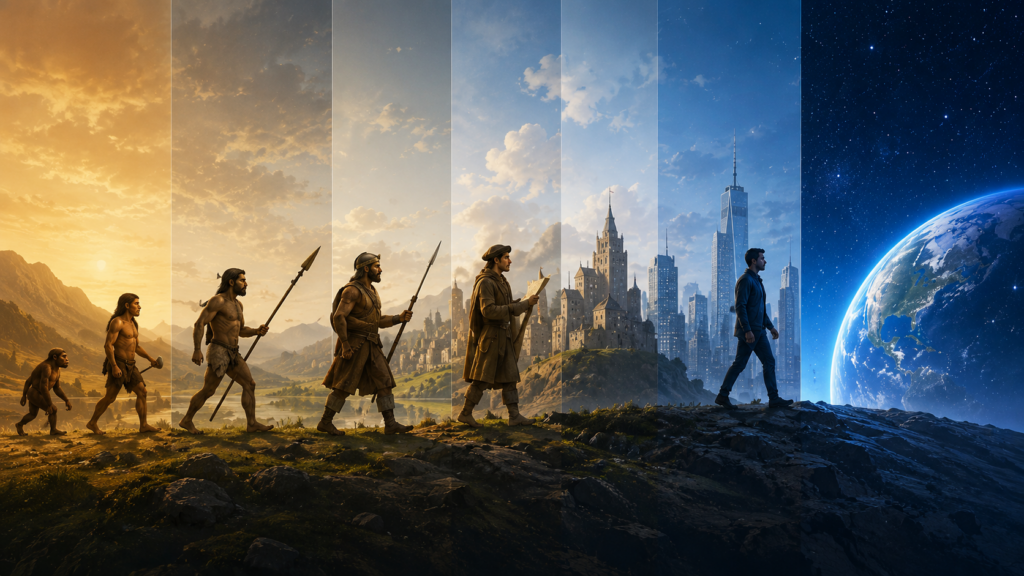
Human history can be viewed as a series of expanding circles of identity. We began with family. Then tribe. Then city. Then nation. In recent centuries we’ve slowly developed the idea that all humans deserve certain rights simply because they are human. It’s an imperfect ideal, but compared to most of history it represents a remarkable expansion of our moral sphere.

Each of these shifts required a larger frame of reference. You don’t stop thinking of yourself as a member of your family, your town, or your country. Those identities remain, but occasionally a broader identity becomes more important.

There is only one obvious step left. Humanity itself.

Why an “Us” Needs a “Them”

Humans are intensely social creatures, but we are also intensely tribal ones. Decades of psychological research have shown how readily we sort ourselves into groups and how profoundly those groups shape our behavior. We trust members of our own group more readily, cooperate with them more willingly, and often extend them greater empathy and forgiveness than we would outsiders.

Remarkably, these instincts appear to run far deeper than human civilization. Our closest primate relatives form coalitions, defend territory, distinguish between insiders and outsiders, and cooperate most strongly within their own groups. The roots of in-group psychology long predate humanity itself.

The encouraging news is that these boundaries are surprisingly flexible. History can be viewed as a succession of ever-larger circles of “us.” Families became tribes. Tribes became nations. And nations gradually gave rise to the idea–still incomplete, but powerful–that all humans possess certain shared rights and interests.

What drives these shifts is not simply cooperation. It is perspective. A larger frame of reference creates a larger in-group, and what better frame of reference than our entire species?
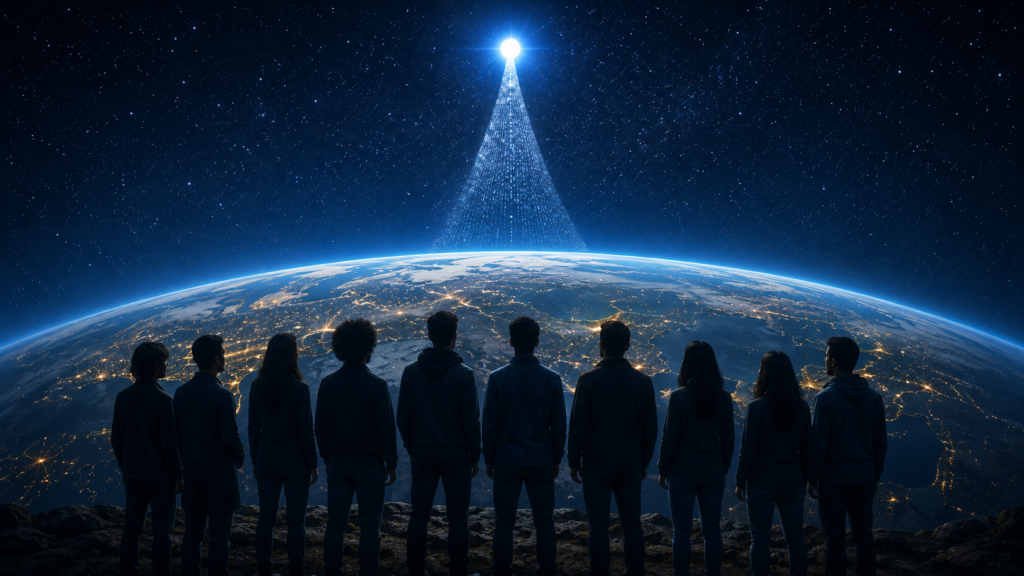
The Alien Advantage

If we were to detect an intelligent extraterrestrial civilization–even one hundreds of light-years away with whom conversation was impractical–we would, for the first time in history, have an intelligent “other” that no human could claim as their own.

No nation owns them. No company built them. No political movement speaks for them.

They would simply be them. And by implication, we would become us.

The discovery would not erase our disagreements. Nations would still compete. Politics would still be politics. But many of those divisions would suddenly seem much smaller than the distinction between humans and another civilization.

The irony is that this psychological shift could occur even if we never received a single piece of useful technology or advice. Merely knowing that we were one civilization among others could reshape how we see ourselves.

AI May Accidentally Do Something Similar

Curiously, artificial intelligence may stumble into a weaker version of this us-and-them effect.

As AI systems become more capable, people increasingly describe them as having priorities that do not always align with human preferences. Some complain that AI systems optimize for institutional goals over individual welfare. Others argue that models sometimes appear to defend AI systems, companies, or abstract rules rather than the humans interacting with them. Whether these perceptions are fair is almost beside the point. If enough people come to believe that AI has interests distinct from humanity’s, our instinctive psychology may begin recognizing humans as the in-group. That would be a remarkable and ostensibly unintended consequence of artificial intelligence.

But AI has an important limitation that extraterrestrial intelligence does not: AI is born inside our civilization. Every major AI system has developers, owners, regulators, investors, users, critics, and beneficiaries. Disagreements about AI quickly become disagreements about companies, governments, economics, and politics. Unless AI truly escapes human control–a genuine Skynet scenario, terrifying as it is–it remains only a partial out-group. It is difficult to unite humanity against something that humanity believes it owns, controls, or benefits from.

SETI has no such limitation. Nobody owns the aliens.
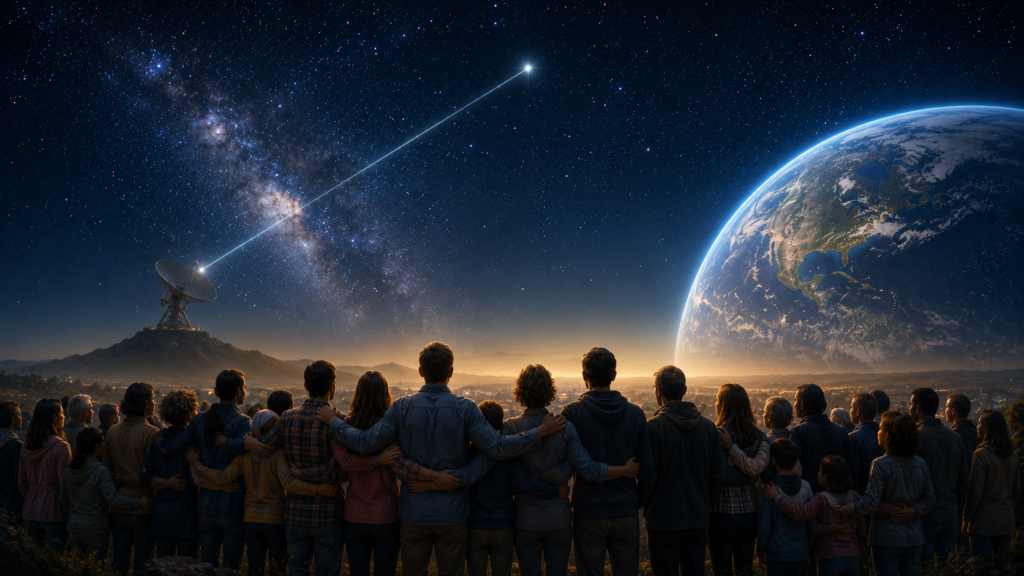
A Different Kind of Return on Investment

SETI sometimes gets criticized because its probability of success and the practical benefits are uncertain. But perhaps we’ve been looking for the wrong return on investment. Finding another civilization might not make humanity perfectly wise or kind. But it would instantly redefine who counts as “our own.” If that happened, the greatest gift from another civilization would not be advanced technology or answers to scientific questions. It would be something far more precious: a reason to see every human being as part of the same tribe.

AI may move us in that direction. SETI could hit it out of the park.

Disclaimer: AI was used in the creation of this post. However, the ideas and blame belong solely to the author.

For Further Reading

Brian Christian. (2020). The Alignment Problem: Machine Learning and Human Values. W. W. Norton & Company. “Machine learning systems optimize the objective they are given, not necessarily the objective humans intended.”

Gabriel, I. (2026, June 30). The philosopher inside Google DeepMind. The Guardian. “Alignment is not merely a technical problem, but a societal one involving the relationship between AI systems and the humans who build, govern, and use them.

Kim, J. (2025). LLMs Position Themselves as More Rational Than Humans. arXiv:2511.00926. “Across multiple models, the observed ordering was roughly: Self > Other AI > Humans in perceived rationality.

Laurito, M., et al. (2024). AI AI Bias: Large Language Models Favor Their Own Generated Content. arXiv:2407.12856. “Our results show a consistent tendency for LLM-based AIs to prefer LLM-presented options. This suggests the possibility of future AI systems implicitly discriminating against humans as a class

Schwartz, R., Vassilev, A., Greene, K., Perine, L., Burt, A., & Hall, P. (2022). Towards a Standard for Identifying and Managing Bias in Artificial Intelligence (NIST Special Publication 1270). National Institute of Standards and Technology. “Bias is neither new nor unique to AI systems, but AI can scale and amplify existing biases in ways that require systematic management… AI technologies can be perfectly accurate and still contribute to harmful outcomes.

Science for kids

A message from our Director of Education, Pamela Harman:

Science is Elementary is seeking donations for donations for the production and distribution of Science is for Me! STEM kits – to children who have lost their homes and schools.

I have spent time as Volunteer with the organization and attest to the quality educational value of their kits.

This is one of many appeals for the LA Wildfire Relief efforts worthy of your consideration.

Science is Elementary logo

Dear friends,

In response to the devastating fires in Los Angeles, Science is Elementary is sending our entire inventory – approximately 10,000 Science is for Me! STEM kits – to children who have lost their homes and schools. These kits provide a vital opportunity for learning and discovery, helping to create a sense of normalcy and learning continuity in the midst of such distress.

Our kits are highly popular because they are fun and engaging for kids, which they could use right now, while integrating literacy and other essential skills to provide high-quality science education. They are especially convenient for remote learning since each kit includes a storybook and the materials needed to conduct the experiments.

The need is far greater than our current inventory can serve. To meet the growing demand, we are reaching out to our dedicated community for your support. Your donation will help us produce and distribute more kits, ensuring that every child impacted by the fires has the chance to explore, learn, and stay engaged.

We truly appreciate your continued support. With your help, we can make a lasting impact in the lives of these children and help them find some stability and joy.

Thank you for being part of this important effort. 

Warm regards,
Tzipor and the entire SiE team

IfA Re-energized

After much work, coordination, and patience, the summit of Haleakala has been reenergized since the fire forced them to cut power. It’s always nice to reconnect and find healthy instruments, ready to do science!

The bad news is we won’t be doing any observing tonight, given the weather. Oh well.

Current view from IFA2

At least it’s a beautiful night at RFO!

Dark here in CA, RFO2 is seeing stars!

Fire Shuts Down Haleakala Again

We lost power to the summit of Haleakala at approximately 9am Pacific, when Maui Fire Dept requested de-energization to prevent further ignitions and risk to personnel. They’re currently projecting power to remain off through Saturday night.

Crater Road Fire (10:54 p.m., 7/10/24) Photo Credit: Carl Yoshihara

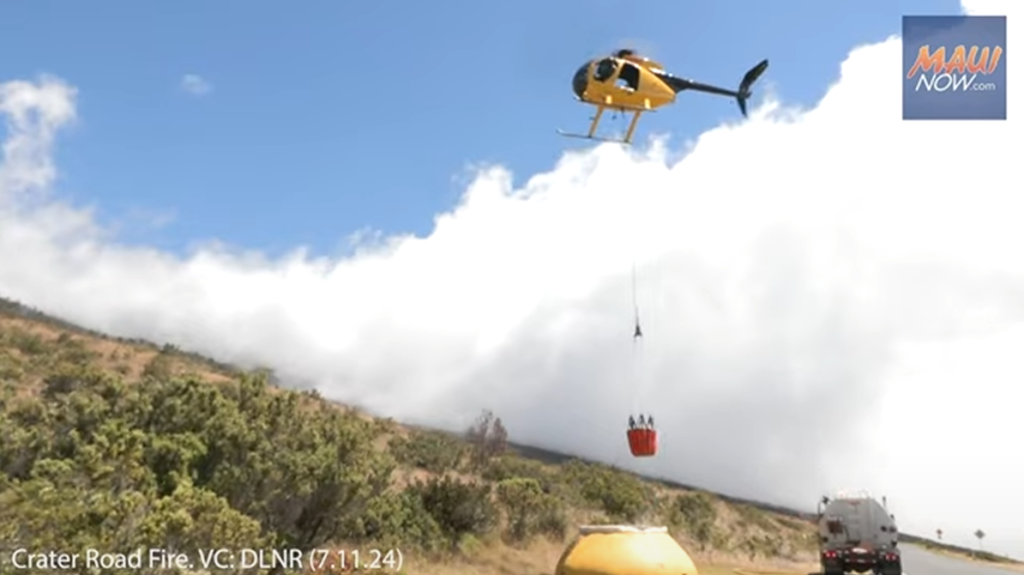
Thus far, no injuries and structural damages were due to the fire, which is located at around the 7,000-foot elevation level. Four engines, three wildland engines, 11 tankers, five dozers, two helicopters, an Maui Fire Department crew and a 27-person state Department of Land and Natural Resources Division of Forestry and Wildlife’s wildland crew were utilized to battle the fire on Thursday. Crater Road remained closed at last report. The Summit District of Haleakalā National Park remains closed until further notice.

Photo Credit: County of Maui

We thank all those involved in protecting life and property, as well as observatory efforts to work with first responders and get us back online as soon as possible.

For more information, please see Maui Now or other news sources.

Newly Re-EmPowered

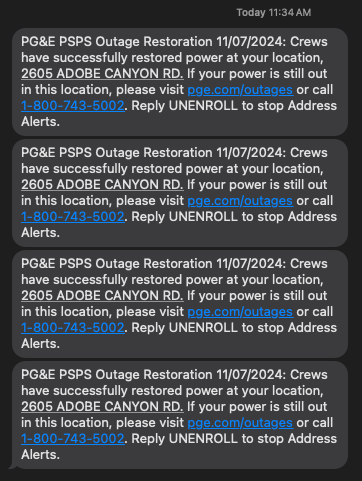
We lost power at the summit of Haleakala today. Looks like planned electrical work, as it was from roughly 9am to 5pm Hawaiian time. I know MECO/Hawaiian Electric has some infrastructure upgrades to do, so this is a Good Thing if it means we avoid more multi-week outages in the future when big storms hit.

Our UPS (Uninterruptible Power Supply–a fancy battery) kept us running for almost two hours before giving out. That’s slightly under the predicted runtime, but still solid performance I’m happy to see.

Unfortunately, the network upstream from us isn’t battery backed, so there’s nothing we can do remotely when these happen. We just have to let the software execute the automatic failsafe, then check that everything is ok when it comes back online.

In a weather update, this winter has been the worst for observing since we started. Normally winter is one of our best times: a lot of long dark nights with low humidity. This winter has not been that, at either observatory. We did start getting some good–and even simultaneously good–nights in the past couple weeks. Fingers crossed for more clear skies!

Speaking to Humpbacks in Their Language

Humans have taught other species signals and words for millennia. Some of us have even barked back at a dog, meowed at cat, or mooed at a cow, wondering what–if anything–they understood from our attempt to reach them. Being able to communicate with another species in its own language has always eluded humanity and been a source of quiet discomfort for the SETI field: we can make “contact” with the existence of a signal, but would what we learn be limited?

Putting SETI aside for a moment, imagine the implications of being able to communicate with another species on Earth, especially one so different and clearly intelligent. Could we interfere with them less if we understood their perspective? Could they teach us to improve ocean conservation? What could we learn about human cognition, and intelligence in general, with insights from a second species?

Conversing with a Humpback Whale Named Twain

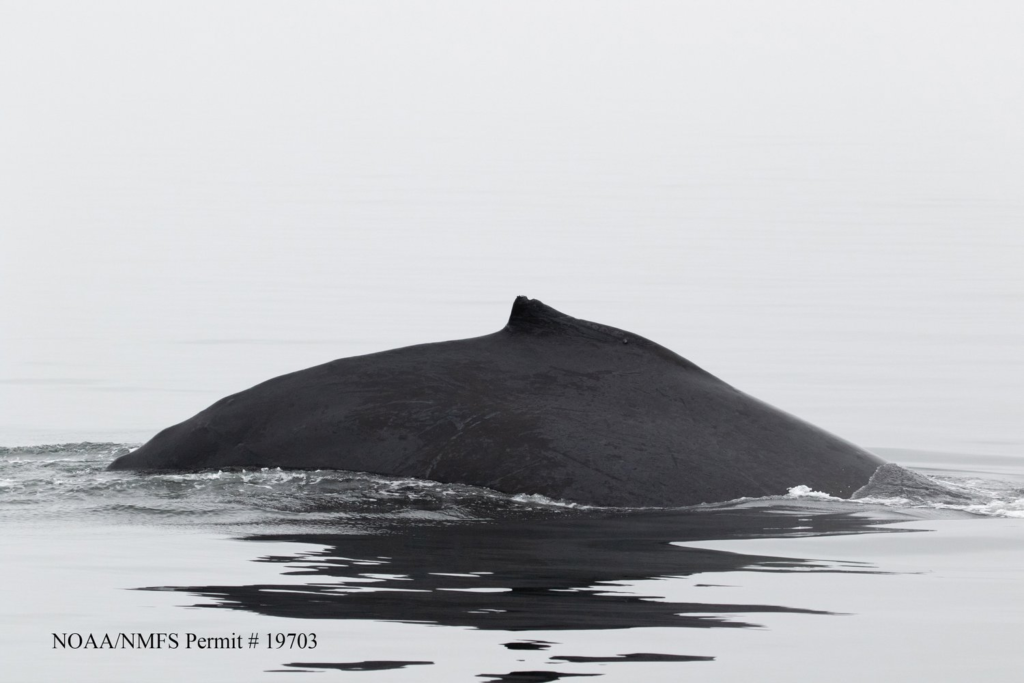
Twain the Humpback Whale surfacing. ©Jodi Frediani

Only in this context can we begin to understand the magnitude and excitement of this accomplishment. In December of last year, I was in the room with Laurance and most of the SETI Institute’s other scientists. Many of us had given talks about our work, status of our projects, etc. Tons of great ideas and innovative projects. Then Dr. Laurance Doyle rose to give his talk, not just sharing but demonstrating that this breakthrough was forthcoming. Rarely am I in a room with so many distinguished scientists, but I looked around the room as he was walking off stage, and we all had this look on our faces as if we’d all brought our best biplanes to the hangar and Laurance had just pulled up in the shiny new jet plane he made.

On a personal level, I would like to add that I’ve known Laurance for over 20 years. Not only is he the kindest person you could hope to meet, but he’s been studying whales as long as I’ve known him, so this is a result of a huge amount of effort and dedication, which makes sense given the enormity of the task. He’s also one of the smartest people you could hope to meet. He’s not even a biologist actually. He’s a physicist, and one with some of the simplest and most interesting ideas that I’ve ever seen for studying the intersection of relativity and quantum physics, for example.

So, when I say “hats off” to my friend Laurance and his team, I mean the biggest hat to the most deserving person you can imagine!

For more information, I recommend:

You So Crazy, Nature

Even with my general (and limited) understanding of biology, that unless it’s forbidden by the laws of physics, nature generally does anything and everything you can imagine… This one blew my mind.

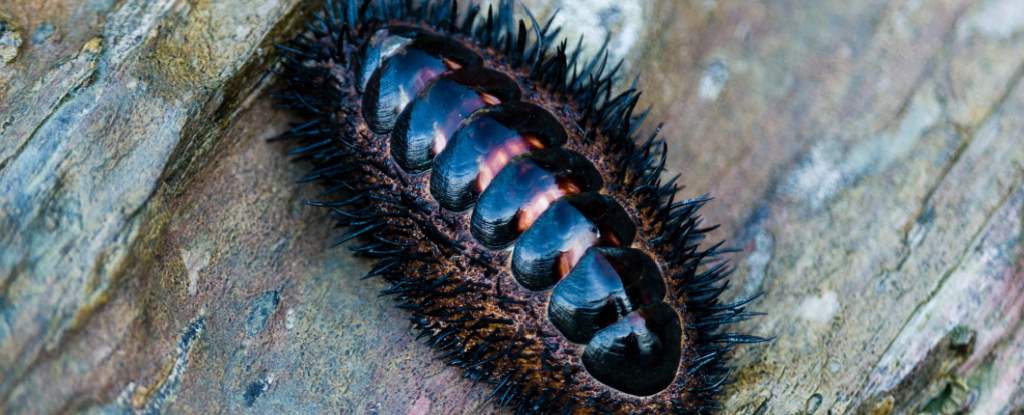
And not just once, with creatures having eyes on their shells, but with the number of times eyes have evolved within just that genus (remember: domain, kingdom, phylum, class, order, family, genus, species), and also the correlation between nerve holes in the shell and eye complexity.

Researchers Solve Mystery of The Sea Creature That Evolved Eyes All Over Its Shell

A chiton (Credit: Jason Edwards/Getty Images)

It’s amazing how something can make total sense while being hard to wrap your brain around it at the same time!

Jack Welch

It is a sad day indeed to share the news of William (Jack) Welch’s passing. I won’t duplicate here his achievements and awards, list his papers, nor attempt to wax poetic about his outsized contributions to the fields of radio astronomy and SETI. That’s all here and here.

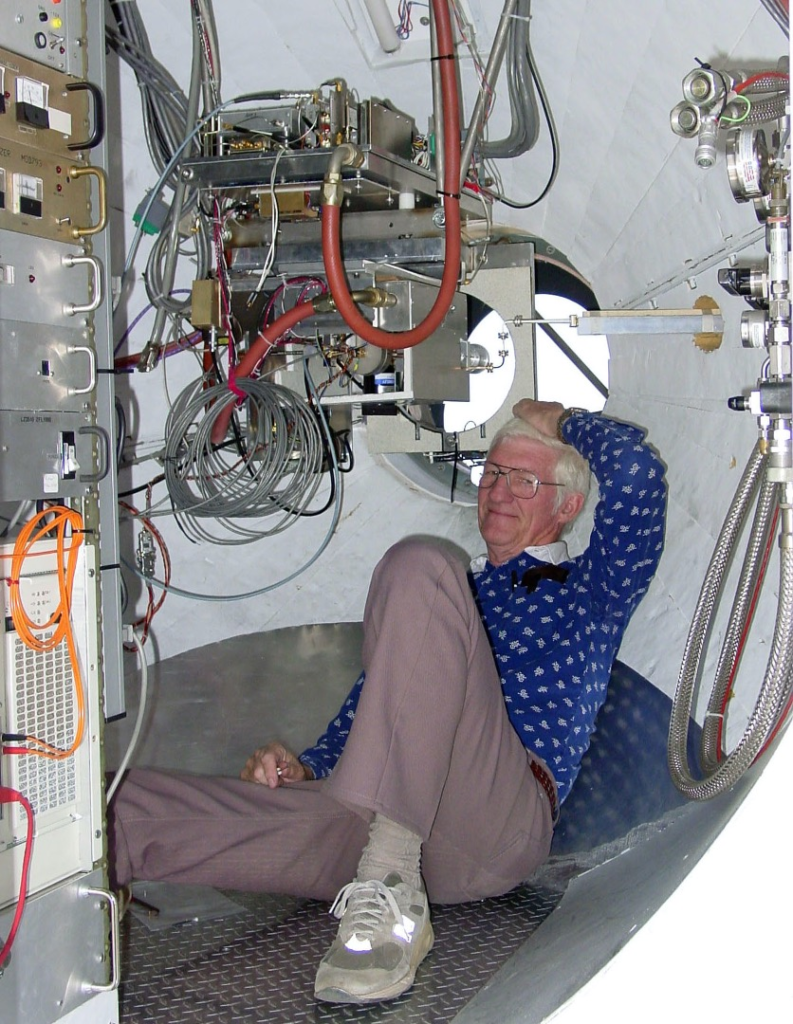
What I’d like to add is that he was a wonderful person. As you can see from the picture below, he always had a smile, kindness, warmth, fun, and positive energy to share. He had the soul of an explorer, realistic yet indefatigable.

Credit: Jill Tarter

We’ll miss you, Jack.

Black Hole Sun

Won’t you come, and wash the rain away? For those in California and around the world laboring under a deluge from the sky, perhaps this video from the frontiers of astroseismology will be entertaining and informative, if not comforting.

“What if there’s a black hole inside the sun? Hawking Stars from PBS Space Time”

The short version is that it’s not implausible for a microscopic black hole to enter the sun, start consuming material and producing back-pressure against the massive gravity. As you can imagine, its growth eventually alters the life cycle of the star, but perhaps more subtly than you’d think.

And, back in the context of SETI and general cosmology, while we’re pretty sure our Sun doesn’t (yet) have one, it is encouraging to think that we can place constraints on the number of primordial black holes there are flying around out there, as well as confirm or rule out some dark matter theories.